Fortune 100 Trusted Advisor • Finds What Others Miss • Builds Frameworks That Scale • Transforms Companies Into Acquisition Targets
I Find What You Didn't Know You Were Looking For
- $500M+ in Enterprise Revenue Contributed
- 4 Companies Acquired After My Strategic Impact
- Up to 100% Revenue Growth Delivered at Organizations I've Joined
- Exceeded Performance Targets by 100%+, Ranking #1 in Peer Group
- 85% Platform Adoption Across Enterprise Clients
Career Highlights
Discovery-driven technology strategist who uncovers what organizations didn’t know they were sitting on — and turns it into their biggest competitive advantage. Has fueled four acquisitions, and transformed companies from regional players into enterprise contenders — leading some of the largest digital transformations across education, financial services, telecommunications, cybersecurity, and agriculture.
K-12 & Higher Education
Financial Services
Cybersecurity & Managed IT Services
Core Skills
Technology Strategy & Digital Transformation
AI & Emerging Technology Adoption Strategy
Enterprise Architecture & Solution Design
Executive Advisory & Strategic Consulting
Cybersecurity, Compliance & Risk Alignment
Discovery-Led Technical Sales & Pre-Sales Engineering
Scalable Framework & Playbook Development
Change Management & Adoption Frameworks
Business & Technical Requirements Analysis
Innovation Program Management
Cross-Functional Team Leadership & Stakeholder Alignment
RFP/RFI/RFQ Process Ownership & Technical Due Diligence
Telecommunications
Agriculture
Healthcare
Enterprise Data
The Discovery
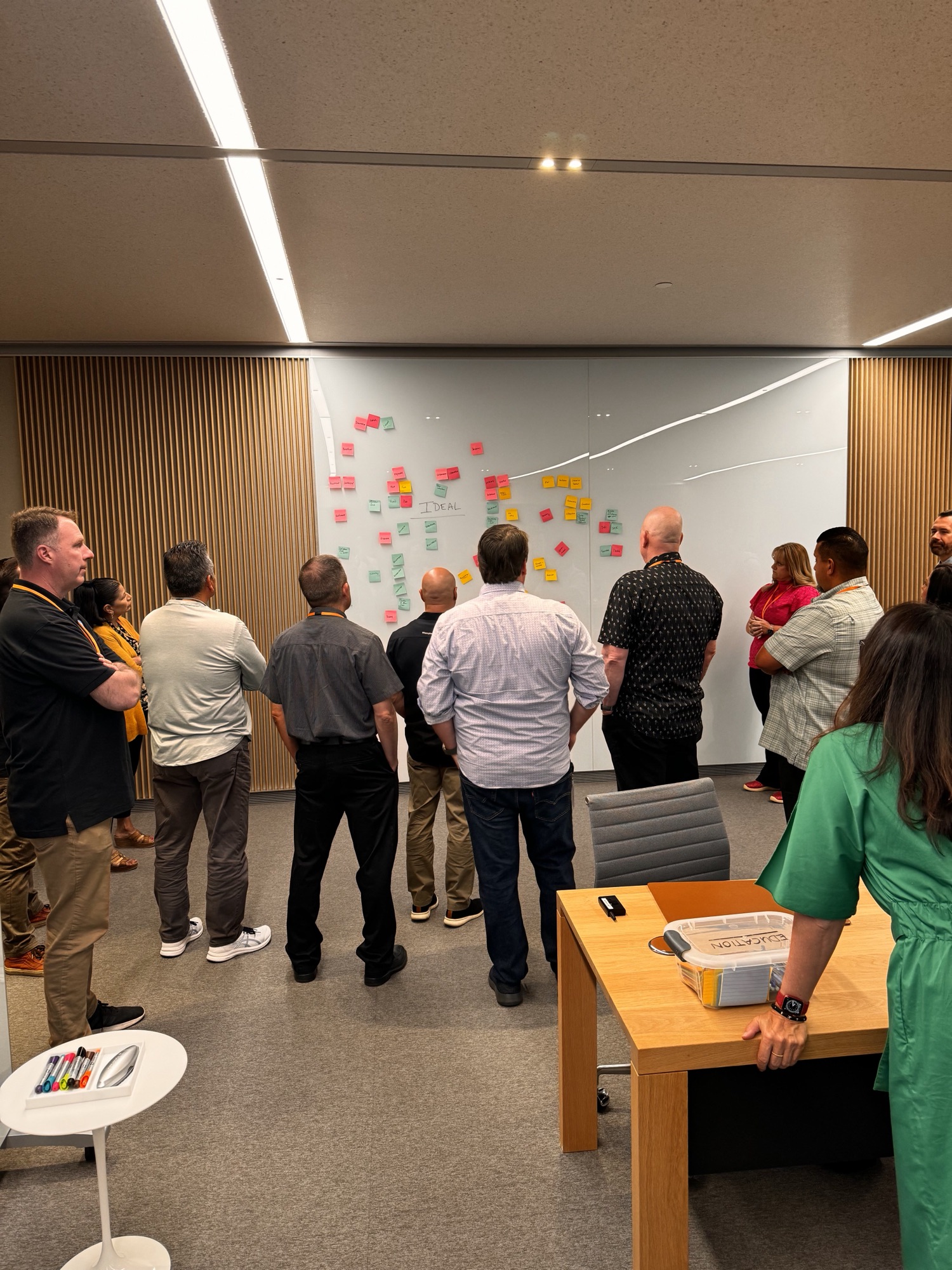
Through deep technical discovery with superintendents, CTOs, and curriculum leaders, I mapped each district’s infrastructure, security posture, and data privacy landscape — and uncovered that these districts weren’t actually making a device decision. They were making a digital transformation decision and didn’t know it. They had zero AI readiness, fragmented cybersecurity governance, and no strategic technology roadmap. But the discovery that changed everything came from a candid conversation with the CTO. He told me that Apple didn’t feel like it was in the community — not the way Google was. Chromebooks were in every backpack, visible, familiar, trusted by parents and teachers. Apple was the premium outsider looking in. That one honest moment revealed two gaps no one else had identified: the districts needed a digital transformation strategy, and Apple needed a community presence strategy. Together, they became the playbook Google couldn’t compete with.
Case Study
The Chromebook Flip
The Hidden Problem
When I inherited 120+ enterprise education accounts, including Dallas ISD (64,000 students) and Fort Worth ISD (75,000 students across 140 schools), the surface-level challenge was obvious: these districts had spent millions on Chromebooks during COVID, and Google owned over 60% of K-12 device share. Chromebooks were cheaper, entrenched, and 93% of districts were planning to buy more. Everyone at Apple saw a pricing problem. I saw something different.
The Framework
I partnered with superintendents, CTOs, and curriculum leaders to turn Apple’s retail locations into community adoption engines — something no competitor could replicate. We hosted hands-on demos for school administrators and teachers first, letting them experience the ecosystem on their terms. Then we scaled it to parents, making the Apple Store part of the district’s education and change management strategy, giving families direct access to the products and solutions their kids would be using before the rollout even hit classrooms. Google had cheaper devices. They didn’t have a storefront in every major metro where a parent could walk in, pick up a Mac, and feel confident about the transition. That was our unfair advantage — and it was born from a conversation, not a slide deck. Alongside this community-driven approach, I built strategic playbooks and implementation frameworks for safe, responsible AI adoption in the classroom, delivered executive briefings on AI ethics and cybersecurity governance, and created scalable enablement programs including automation guides and deployment best practices that the broader team could run across accounts.
The Discovery
I targeted the biggest fish first: Chase, a $45 million opportunity with stiff competition. Through deep discovery across their operations, compliance, IT, and lending teams, I mapped high-volume workflows and identified where DocMagic’s platform could solve problems their current vendors couldn’t. I also uncovered a critical product gap — DocMagic had no mobile solution — which was a dealbreaker for enterprise adoption. Instead of working around it, I led the full overhaul: a redesigned website, new mobile experience, and DocMagic’s first-ever mortgage mobile app.
Case Study
THE ENTERPRISE BREAKTHROUGH
The Hidden Problem
DocMagic had a strong digital lending and eClosing product, but their entire client base was local and regional banks. They had zero enterprise national banking presence. The company hired me to change that — but the challenge went deeper than anyone initially realized. Large financial institutions like Chase operated in heavily regulated environments where district clerks in many jurisdictions still didn’t permit e-signatures, internal politics made decisions glacially slow, and legacy system integration fears created deep skepticism. DocMagic wasn’t just missing enterprise clients — they were missing the enterprise-grade sales motion, product positioning, and stakeholder navigation required to compete at that level.
The Framework
I built executive-level business cases and strategic presentations tailored to each stakeholder group — legal, compliance, IT, business leadership — to overcome internal politics and regulatory hesitation. I ran strategic demonstrations that aligned DocMagic’s platform directly to Chase’s workflows and stakeholders shared values in a way competitors couldn’t match. After landing Chase, I developed a repeatable enterprise sales blueprint that the broader team could scale to Bank of America, Wells Fargo, and beyond.
The Discovery
I identified that Pitney Bowes’ proprietary mailing and addressing data was an untapped strategic asset — geocoded, location-rich intelligence that could power high-impact solutions far beyond mail. Nobody inside the company saw it that way. I did. The pivotal test came with Verizon: their website pushed “home coverage” checks, but with 55% smartphone penetration, users were dropping off 25% during plan research because the tool ignored how people actually use mobile — at work, at the grocery store, at the bank. I partnered with Group 1’s geocoded POI data and built a proof-of-concept: an interactive tool where prospects input real destinations and saw coverage heat maps overlaid on their actual life patterns.
Case Study
THE DATA NOBODY SAW
The Hidden Problem
Pitney Bowes was a 7,000-employee global company that everyone associated with one thing: mailing. The software division had powerful data governance and information management capabilities, but in competitive enterprise deals, they were invisible next to IBM. The conventional wisdom was “nobody gets fired for hiring IBM.” The sales team was trying to compete on features. I realized the problem wasn’t the product — it was the positioning.
The Framework
When I demoed it live for Verizon’s digital marketing executives, they said it changed everything. That POC became my playbook. I scaled the exact same pattern to pitch Apple during their iOS 6 Maps crisis — when navigation errors were destroying user trust. Using the same POI-rich addressing data, I demonstrated real-time standardization that could fix 30–40% of inaccuracies. One winning proof-of-concept, replicated across tech giants.
The Discovery
Through deep requirements analysis with field supervisors and operations stakeholders, I mapped the end-to-end workflow and identified that the real barrier wasn’t just paper — it was the assumption that field environments couldn’t support digital tools. Palm Pilots had tiny screens, limited battery, clunky stylus input, and field workers operated in areas with spotty cellular connectivity. Everyone assumed the technology wasn’t ready. I saw a design challenge, not a technology limitation.
Case Study
THE INNOVATION THAT SPARKED AN ACQUISITION
The Hidden Problem
Monsanto was a global agriculture giant managing vast field operations, and their field workers were drowning in paper. Time tracking and activity logging was manual, causing 2–3 day payroll delays, reporting errors, and near-zero supervisor visibility into labor allocation across plots. Monsanto knew they had an efficiency problem. What they didn’t realize was that they were sitting on the early use case for mobile workforce technology — years before smartphones existed.
The Framework
I designed an offline-first architecture with smart data compression and batch syncing during vehicle downtime, built custom middleware to bridge Palm OS with TimeLink’s backend and legacy ERP systems, and conducted rigorous field testing in real crop conditions. I created detailed wireframes, use cases, and process flows that became the implementation blueprint — and coordinated stakeholders to secure buy-in from skeptical supervisors who didn’t believe handhelds could replace paper.
Testimonials
What People Say
“Kenan is a rare combination of strategic thinker and hands-on operator. At DocMagic, he quickly mastered a complex, decades-old technology platform and immediately began identifying ways to improve how teams worked across Sales, Product, and Engineering. One of his most impactful contributions was redesigning our RFP process. What had previously taken weeks was cut by more than half through his thoughtful use of technology, better knowledge management, and clearer workflows. His recommendations were well-researched, practical, and ultimately adopted by the team — a testament to both his preparation and credibility. Kenan leads with curiosity, calm, and empathy. He’s an excellent communicator who can translate technical complexity for both technical and non-technical stakeholders, and he consistently earns trust across teams. He was one of the highest-rated contributors in our 360-degree review process, and a pleasure to work with. Kenan is the kind of leader you rely on when you want to modernize systems, improve efficiency, and do it in a way that brings people along rather than burning them out.”
“Kenan consistently demonstrated exceptional analytical and problem-solving skills in his work with clients. His role required him to understand complex business requirements, configure and implement enterprise applications, and deliver solutions that often went beyond standard integrations. What stood out was his ability to think creatively while staying grounded in real-world constraints. On multiple occasions, his approach resulted in solutions that benefited both clients and our internal teams. He took initiative, contributed beyond his assigned responsibilities, and quickly earned the trust of those around him. Kenan has a rare combination of intelligence, curiosity, and reliability. He grasps complex subject matter quickly, thrives in challenging environments, and approaches problems with both rigor and empathy. I’ve consistently relied on him regardless of task complexity, and I give him my highest recommendation.”